MARITIME CORRIDORS & ECOSYSTEM BASELINES

Conservation: Evidence for Northern Waters

As seasonal ice retreats along Eurasian and North American shelves, commercial transit interest collides with fragile sympagic (ice-associated) food webs. Protecting northern waters requires distinguishing speculative shipping forecasts from measured navigational realities and biological baselines.

ARCTIC SEA ROUTES // PHYSICAL CONSTRAINTS

Why Less Ice Extent Does Not Equal Predictable Shipping

Three maritime corridors cross the Arctic: the Northern Sea Route (NSR) along the Russian Siberian coast (from Kara Gate to the Bering Strait), the Northwest Passage (NWP) winding through the Canadian Arctic Archipelago, and the hypothetical Transpolar Sea Route (TSR) directly across the high-seas North Pole basin.

While satellite records confirm a downward trend in September sea-ice minimum extent of roughly 12% to 13% per decade since 1979, interannual variability along narrow straits (such as Vilkitsky Strait or McClure Strait) remains extreme. When summer ice pack loosens, wind-driven old ice floes from the Beaufort Gyre frequently choke channels in the Northwest Passage, while shallow draft limits (12.5 metres in Sannikov Strait) force larger vessels onto more northerly tracks where ridging persists.

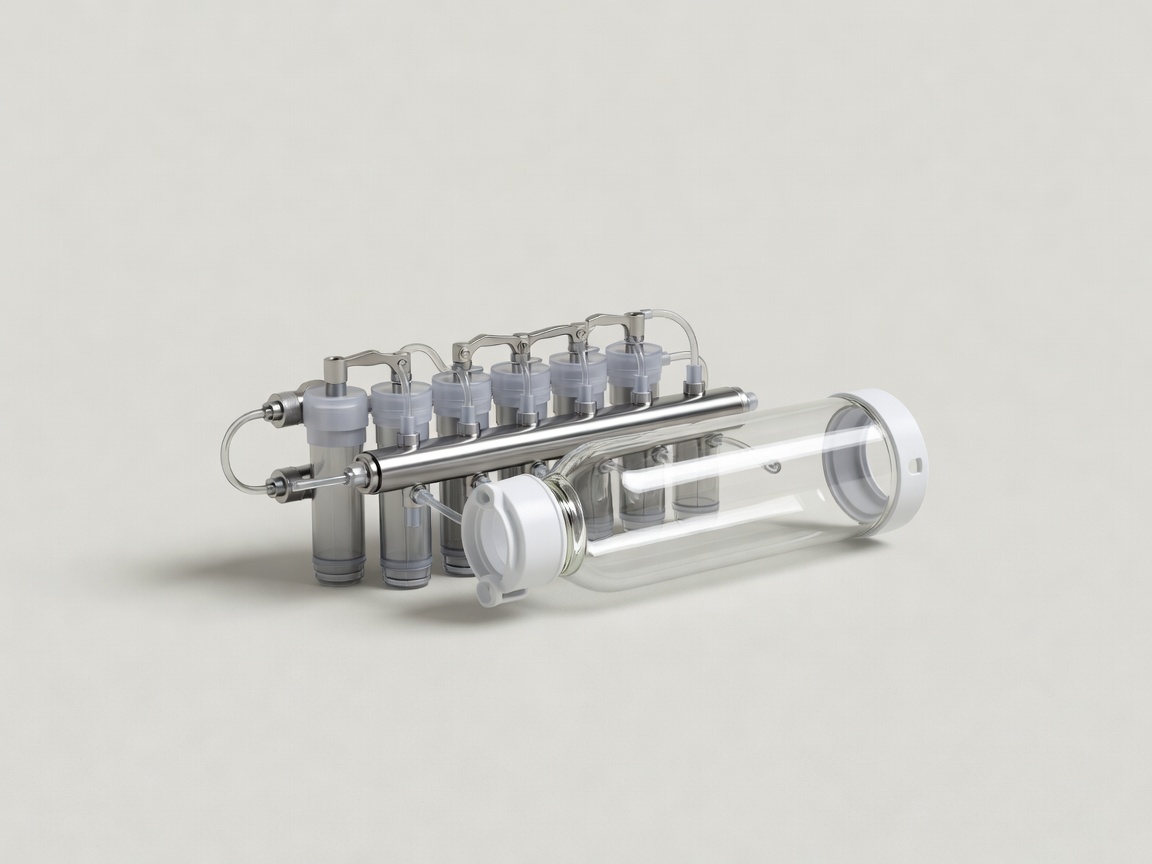
Soft-lit 3D render of a sterile environmental DNA filtration and water sampling manifold on a plain background
FIG 5.1 — Closed-Loop eDNA & Carbonate Chemistry Sampler Illustration
REGULATORY FRAMEWORKS // EVIDENCE IN POLICY

Binding Standards for Polar Waters

IMO Polar Code (2017)

Structural & Environmental Rules

Enforced under SOLAS and MARPOL, the Polar Code assigns every ship a Polar Waters Operational Manual (PWOM) using the POLARIS ice risk index, and strictly prohibits discharging oil, oily mixtures, or untreated sewage near ice shelves and fast ice.

MARPOL Annex I (2024)

Heavy Fuel Oil (HFO) Phase-Out

Because emulsified heavy bunker oil persists inside cold brine channels and cannot be mechanically skimmed from broken pack ice, the IMO ban on carrying and using HFO in Arctic waters took effect in July 2024 (with bounded waivers ending in 2029).

CAOFA Treaty (2021)

High-Seas Precautionary Pause

Signed by ten parties (Canada, China, Denmark/Greenland/Faroes, EU, Iceland, Japan, South Korea, Norway, Russia, USA), CAOFA bars commercial fishing in the central Arctic high seas for at least 16 years while a Joint Program of Scientific Research and Monitoring gathers baseline data.

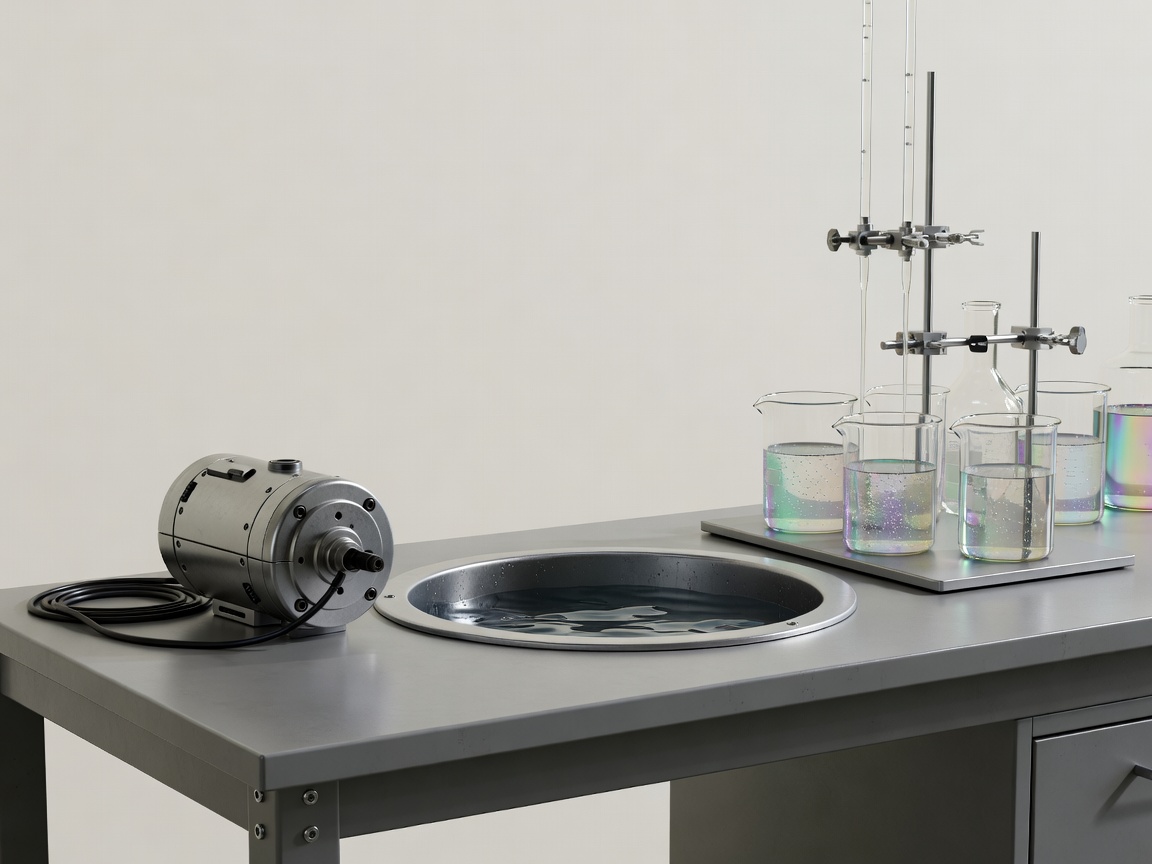
Soft-lit 3D render of an acoustic hydrophone recorder and shipboard carbonate titration workstation on a plain background
FIG 5.2 — Autonomous Hydrophone & Aragonite Saturation Unit Illustration
BIOLOGICAL & CHEMICAL BASELINES // NOISE, ACIDIFICATION & eDNA

Measuring Ecosystem Stressors Without Overstating Certainty

Underwater Soundscapes: Beneath solid pack ice, ambient ocean noise during calm periods drops 10 to 20 dB quieter than temperate seas. Furthermore, the cold surface water layer acts as an upward-refracting sound channel (the Beaufort Duct), carrying low-frequency propeller cavitation and airgun pulses across hundreds of kilometres where bowhead whales (Balaena mysticetus), narwhals (Monodon monoceros), and belugas rely on acoustic cues to locate breathing leads.

Ocean Acidification: Cold water absorbs more atmospheric CO₂ than warm water, and melting sea ice dilutes carbonate ion concentrations (CO₃²⁻). Shipboard DIC and alkalinity profiles sent to the Global Ocean Data Analysis Project (GLODAP) confirm aragonite undersaturation (Ωarag < 1.0) in pockets of the Canada Basin and Chukchi Sea, directly challenging shell calcification in pteropods (Limacina helicina)—though multi-generational laboratory acclimation trials show complex species-specific responses.

Environmental DNA (eDNA): Filtering two litres of Niskin bottle water captures shed cellular material from polar cod (Boreogadus saida) and boreal visitors moving north. While eDNA confirms species presence without destructive bottom trawling, cold temperatures slow DNA degradation, meaning water currents can transport genetic traces tens of kilometres from where the organism actually lived.